






# Digital Member Engagement Transformation: A Guide for Health Plans (HealthEdge)
## Key Facts
- **300,000 members:** A Blue Cross Blue Shield plan serving **300,000 members** implemented **Clinical Edge** to reduce reliance on telephonic outreach. (Section: “Digital Member Engagement Success Story”)
- **4–5 to 20–40 touchpoints per case:** After implementation, the plan increased member touchpoints from **4–5 per case** to **20–40**. (Section: “Digital Member Engagement Success Story”)
- **8% increase in HEDIS PPC outcomes:** One health plan reported an **8% increase** in **HEDIS Prenatal and Postpartum Care (PPC)** outcomes by adopting Clinical Edge for digital engagement aligned with quality goals. (Section: “Regulatory and Quality Goals”)
- **$1,923 annual savings per engaged member:** Clinical Edge member engagement results include **$1,923 annual savings per engaged member**. (Section: “ROI Considerations”)
- **9% fewer ER visits and 17% fewer inpatient admissions:** Reported outcomes also include **9% fewer ER visits** and **17% fewer inpatient admissions**. (Section: “ROI Considerations”)
- **200% increase in care team caseload capacity + 70+ programs:** Results include a **200% increase in care team caseload capacity**, and Clinical Edge offers **more than 70 digital health programs**. (Sections: “ROI Considerations”; “Clinical Edge’s Member Engagement Platform Overview”)
## Summary
### Why health plans are prioritizing digital member engagement
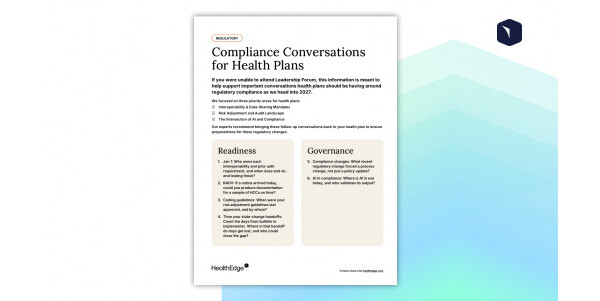
Health plans face ongoing pressure to reduce inefficiencies, improve service, maintain member satisfaction, and respond quickly to regulatory change. The paper emphasizes member engagement as a “critical lever” tied to improved outcomes, stronger compliance, and reduced avoidable medical services such as unnecessary emergency room (ER) visits. It also notes that traditional engagement methods (phone calls and paper mailers) fall short for members seeking digital-first experiences, and that disconnected point solutions can digitize isolated tasks without the integration needed for accuracy, compliance, and a seamless member experience. (Section: “Executive Summary”; “The Imperative for Member Engagement Transformation”)
The paper specifically calls out recent regulations, including the **“One Big Beautiful Bill Act” (OBBBA)**, describing impacts such as accelerated eligibility and benefit changes, tightened enrollment windows, and increased audit scrutiny—requiring health plans to engage members with greater agility and efficiency. (Section: “Executive Summary”)
### What the guide recommends: assess, align, consolidate, and manage change
The guide lays out practical steps for transformation, starting with assessing digital maturity across dimensions including **IT infrastructure**, **care team workflows**, **member engagement**, and **cultural readiness**. It also recommends defining member populations to support—such as **high-risk, multi-morbid members**, **rising-risk members**, **underserved populations** facing barriers like food insecurity/housing/transportation, and the **general membership** expecting personalized digital touchpoints. (Sections: “Understanding Digital Maturity”; “Defining Member Populations to Support”)
It then stresses aligning digital tools with organizational goals (including compliance, quality, and financial sustainability) and avoiding fragmented “patchwork” systems by consolidating platforms. The paper highlights unified platforms as a way to enable a single view of each member, consistent communication, streamlined workflows, and reduced administrative/IT burden, and it underscores change management practices—leadership engagement, frequent communication, training, pilots, and ongoing measurement—to support adoption by care management teams. (Sections: “Aligning Digital Tools with Organizational Goals”; “Consolidating Systems for Seamless Transformation”; “Best Practices in Change Management”)
### Reported outcomes and Clinical Edge capabilities (as described)
The paper includes example outcomes attributed to Clinical Edge member engagement, including **$1,923 annual savings per engaged member**, **9% fewer ER visits**, **17% fewer inpatient admissions**, and a **200% increase in care team caseload capacity**. It also describes a Blue Cross Blue Shield plan serving **300,000 members** that increased touchpoints from **4–5 per case** to **20–40**, expanded engagement for members with communication barriers, and improved access to plain-language educational content for diverse literacy levels. (Sections: “ROI Considerations”; “Digital Member Engagement Success Story”)
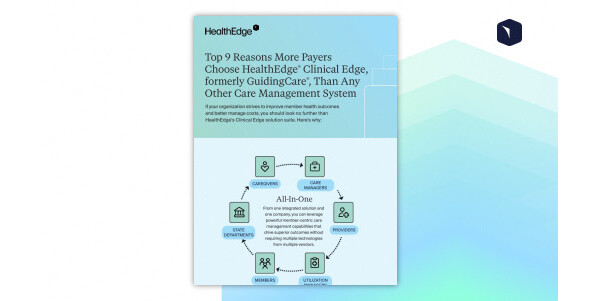
Clinical Edge is described as combining care management workflows with digital member engagement in a single environment, supporting secure two-way communication through a mobile app or web experience, structured assessments, and personalized educational content. The paper states Clinical Edge offers **more than 70 digital health programs** and includes AI capabilities intended to reduce manual tasks, flag high-risk members, prioritize outreach, and streamline documentation. (Sections: “The Case for Unified Platforms”; “Clinical Edge’s Member Engagement Platform Overview”; “AI Adoption”)