





# Preparing for the Future of Care Management With an Integrated Operating Model (AI-Powered Operational Infrastructure)
## Key Facts
- **This is “the first part in a two-part series,”** featuring **HealthEdge Vice President of Product Development Bobby Sherwood** on how a new operating model can transform care operations for health plans (Intro, para 1).
- **Health plans are under pressure from “rising medical costs, regulatory demands, and workforce shortages,”** and the post argues the traditional approach of “layering on additional software and hiring more staff” is “isn’t sustainable” (Intro, paras 3–4).
- **HealthEdge describes an “AI-powered operational infrastructure for health plans”** that combines **AI-enabled technology + services designed to lower total costs**, with **“contractual accountability” built into the model** (Intro, para 5).
- **Bobby Sherwood says HealthEdge is not only providing technology but “building toward taking responsibility”** for outcomes such as **“medical cost trends, member satisfaction, and clinical quality measures”** (Quote block under Intro).
- **Sherwood identifies workforce shortages as the biggest driver of operational change right now,** saying health plans “can’t hire clinical staff fast enough” to keep up with member growth, regulatory requirements, and care management complexity (Section: “Addressing Workforce Shortages with AI,” paras 1–2).
- **AI capabilities referenced within Clinical Edge (formerly HealthEdge GuidingCare) include** **AI-enabled optical character recognition (OCR)**, **Intelligent Care Guidance**, and **Ambient Clinical Intelligence**, aimed at automating routine tasks, streamlining decision-making, and supporting documentation completeness (Section: “Addressing Workforce Shortages with AI,” para 3).
## Summary
## Why health plans are rethinking care management operating models
Care managers “did not go into nursing school to push paper,” and the post frames a core challenge: too much clinical time is absorbed by administrative work like authorization reviews and compliance follow-ups. Against a backdrop of rising medical costs, regulatory demands, and workforce shortages, the article argues that simply adding more software or staff is not sustainable and that care operations need a different approach (Intro, paras 2–4).
## What an “AI-powered operational infrastructure” means—beyond traditional outsourcing
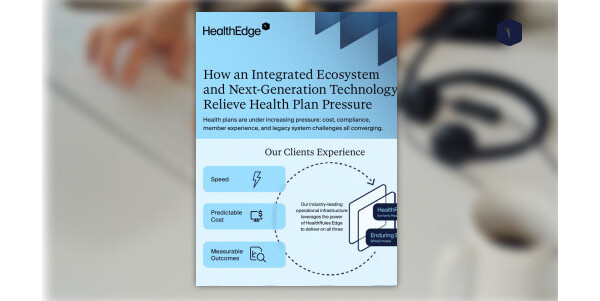
Bobby Sherwood, Vice President of Product Development at HealthEdge, contrasts traditional business process outsourcing (BPO)—described as labor cost arbitrage—with HealthEdge’s “AI-powered operational infrastructure,” which he positions as operational transformation designed to deliver measurable outcomes, not just cheaper labor. The model is described as an integrated ecosystem that combines AI-driven automation, clinical expertise, and services, with contractual accountability tied to outcomes such as medical cost trends, member satisfaction, and clinical quality measures (Sections: “Defining the New Standard,” paras 1–4; Quote block under Intro).
## How AI is positioned to help with workforce shortages and administrative burden
Sherwood says workforce shortages are the biggest force driving operational change because health plans cannot hire clinical staff fast enough to match member growth and regulatory demands. The post points to AI capabilities within HealthEdge Clinical Edge (formerly HealthEdge GuidingCare)—including AI-enabled OCR, Intelligent Care Guidance, and Ambient Clinical Intelligence—as ways to automate routine tasks, streamline decision-making, and improve documentation completeness. The intended operational shift is to move clinical staff away from administrative work (including authorizations and compliance burden) and toward higher-impact activities like complex case management and member relationship building (Section: “Addressing Workforce Shortages with AI,” paras 1–4).
## Redesigning care delivery around outcomes and shared accountability
Rather than focusing only on workflow efficiency, the post emphasizes redesigning the care delivery model around the outcomes a health plan needs to achieve. It argues that typical software contracts are based on access to tools, while this operating model aims for aligned incentives and shared accountability for measurable improvements—positioning the engagement more as a strategic partnership than a traditional vendor relationship (Section: “Redesigning Delivery for Measurable Impact,” paras 1–4).